
After a tooth is removed, the surrounding bone and soft tissue are expected to heal. In some cases, that doesn’t happen. This can leave a hollow space inside the jawbone known as a Covered Socket Residuum (CSR). These areas are most commonly found at old extraction sites where no bone grafting material was placed and develop when bone fails to regenerate fully during healing.
Bone Cavitation
When an Extraction Site Doesn’t Heal the Way It Should

What causes CSR?
A Covered Socket Residuum is an empty or poorly healed space within the jawbone. It develops when:
- Blood supply to the area was limited during healing
- The periodontal ligament of the extracted tooth was not fully removed
- The bone did not regenerate properly after the extraction
Over time, these spaces become an environment where microorganisms and toxins accumulate, leaking toxins that affect the body systemically.
Signs You May Have a Bone Cavitation or CSR
Lesions from bone cavitation are difficult to detect because they don’t always cause noticeable symptoms. However, some patients report:
- Unexplained jaw discomfort
- Sensitivity in old extraction areas
- Persistent inflammation
- Symptoms that seem unrelated to any specific tooth
- Persistent bad taste
In other cases, cavitations exist with no local symptoms at all, which is why a thorough diagnostic evaluation matters.
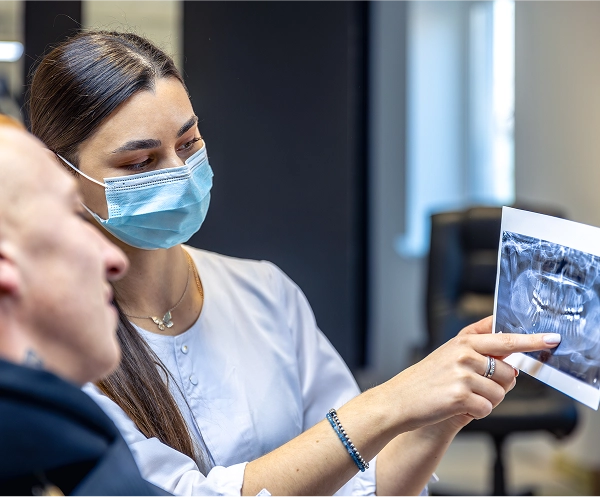
How Does Dr. Perez Treat Bone Cavitations?
Dr. Perez, a bone cavitation specialist in Upland, CA begins with Cone Beam CT (CBCT) scans to evaluate the jawbone in three dimensions. This imaging detects areas where bone density appears abnormal and indicates whether a previous extraction site has healed properly or whether a CSR is present. All CT scans are sent to a Radiologist who provides a detailed written report of the findings.
If a CSR is identified, Dr. Perez reviews the findings carefully before recommending any dental cavitation treatment. Every patient’s situation is different and the goal is always to understand the true condition of the bone and determine the most appropriate path toward healing.
Common Questions
Your Questions Answered
We believe in educating our patients. Here are answers to common questions about holistic dentistry and our specialized treatments.
What is bone cavitation treatment?
It addresses hollow, poorly healed areas inside the jawbone (CSR) left after an extraction. Dr. Perez uses CBCT imaging to diagnose and plan treatment for proper healing.
Do I need a jawbone cavitation dentist?
If you have unexplained jaw pain, sensitivity near an old extraction site, or persistent inflammation, a jawbone cavitation dentist can evaluate the area, even if symptoms seem unrelated to a specific tooth.
Is cavitation surgery painful?
It depends on the case. Dr. Perez first reviews CBCT scans and a radiologist’s report to plan the least invasive approach for your situation.
Where can I find a bone cavitation specialist in Upland, CA?
Upland Lighthouse Dentistry offers CBCT-based diagnosis and treatment for bone cavitations, led by Dr. Isabel Perez, a trusted bone cavitation specialist in Upland, CA.
How do I get bone cavitation treatment in Upland, CA?
Schedule a consultation for a CBCT scan. Dr. Perez will review the results with a radiologist and recommend the right jawbone cavitation treatment for you.
Concerned About an Old Extraction Site?
If you have an extraction site that never felt quite right, or want a more thorough evaluation of your jawbone, a CBCT scan can give Dr. Perez the detail a standard X-ray cannot.