3D Cone Beam Scan

Looking for Answers That X-Rays Didn’t Show?

Many dental problems develop silently deep inside the jawbone — no pain, no visible signs, nothing showing on a standard X-ray.

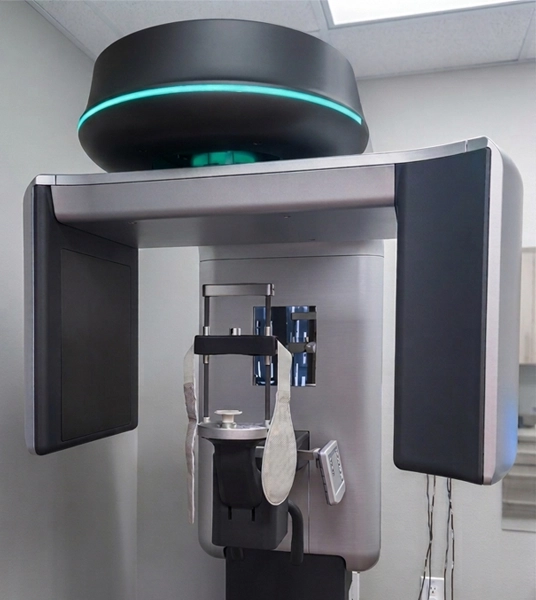
At Upland Lighthouse Dentistry, Dr. Perez uses 3D cone beam scan as a core diagnostic tool. Unlike traditional flat X-rays, a cone beam CT scan creates a full three-dimensional image of your teeth, jawbone, sinuses, airway, and surrounding structures — revealing conditions that would otherwise go undetected.

Why Traditional X-Rays Often Aren't Enough

Standard dental X-rays produce flat, two-dimensional images. Because structures overlap in these images, infections inside the bone, lesions, and airway narrowing can remain completely invisible — even to an experienced eye.

A cone beam CT scan eliminates that limitation. Dr. Perez can examine the mouth from every angle and layer, giving her a complete picture before making any diagnostic or treatment decision.

When Does Dr. Perez Recommend a Dental Cone Beam CT Scan?

Dr. Perez recommends CBCT imaging in four key situations:

1. TMJ Symptoms: Jaw clicking, chronic jaw pain, neck and shoulder tension, or unexplained headaches may have a structural cause inside the joint or surrounding bone that only 3D imaging can reveal.

2. Chronic, Autoimmune, or Cancer-Related Conditions: Patients managing chronic disease, autoimmune conditions, or undergoing cancer treatment benefit significantly from a thorough oral evaluation. Hidden oral infections and bone pathology can interfere with the body’s ability to heal and respond to treatment.

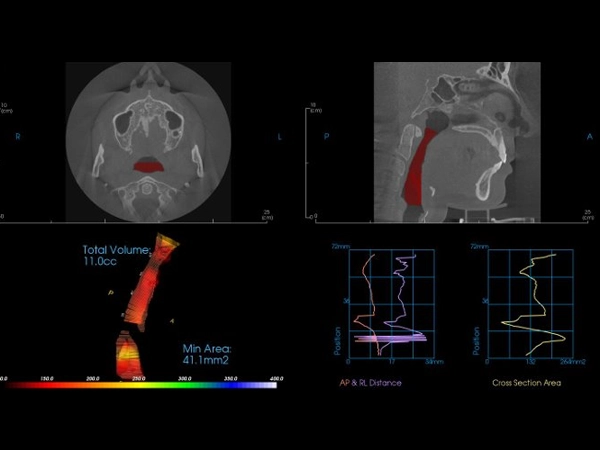
3. Sleep Apnea or UARS: CBCT imaging allows Dr. Perez to evaluate the airway in three dimensions — assessing its size, shape, and any structural factors contributing to breathing obstruction during sleep.

4. Orthodontic Treatment: Before any orthodontic care begins, a cone beam CT scan allows Dr. Perez to assess jaw position, bone quality, airway space, and TMJ health — ensuring treatment is planned with the whole system in mind, not just tooth alignment.


What a Cone Beam CT Scan Can Detect

Using CBCT imaging, Dr. Perez evaluates:

  • Hidden bone infections and abscesses
  • Bone cavitations (areas of poor healing inside the jaw)
  • Complications around previous root canal treatments
  • Sinus inflammation linked to dental infections
  • Airway size and structural restrictions
  • TMJ joint health and position
  • Any abnormal growths, calcifications, or radiodense findings in the craniofacial area

When Your X-Ray Looks Normal — But Something Still Feels Wrong

This is one of the most common situations Dr. Perez encounters. A patient has had multiple X-rays, been told everything looks fine — yet something clearly isn’t right.

Because a 3D cone beam CT scan shows the mouth in full three dimensions, it frequently reveals infections or bone changes that were completely invisible on traditional X-rays.

Patient A
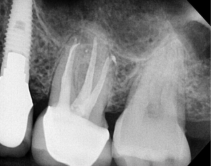
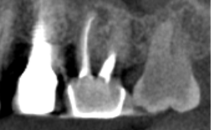
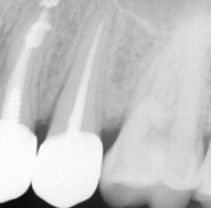
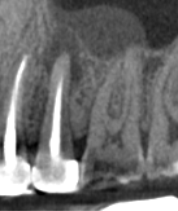
Xray of a root canal tooth #14CBCT Scan of same tooth #14, notice the lesion on the bone at the tip of the left rootNotice root canal #13 on xraysCBCT Scan on same tooth #13, there is a lesion at the tip of the root causing sinus membrane inflammation.
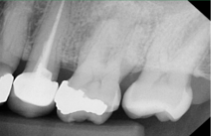
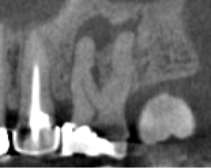
Xray tooth 14CBCT tooth 14Xray tooth 13CBCT tooth 13
Patient C
Xray tooth #14CBCT Scan tooth #14, bone lesion affects both roots.

Two Cases That Changed Everything

These are real examples of what CBCT imaging revealed — conditions that would have been missed entirely with traditional X-rays.

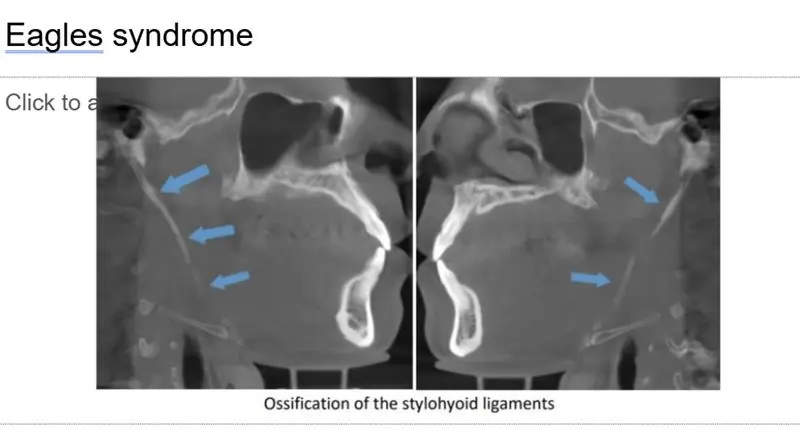
Case 1 — Eagle Syndrome A patient presented with symptoms very similar to TMJ — jaw pain, neck tension, and facial discomfort. A dental cone beam CT scan revealed the true cause: Eagle Syndrome, an abnormally long styloid process with ossification of the stylohyoid ligament. An oral appliance would have been the wrong treatment entirely. Dr. Perez was able to refer the patient appropriately for the care she actually needed.

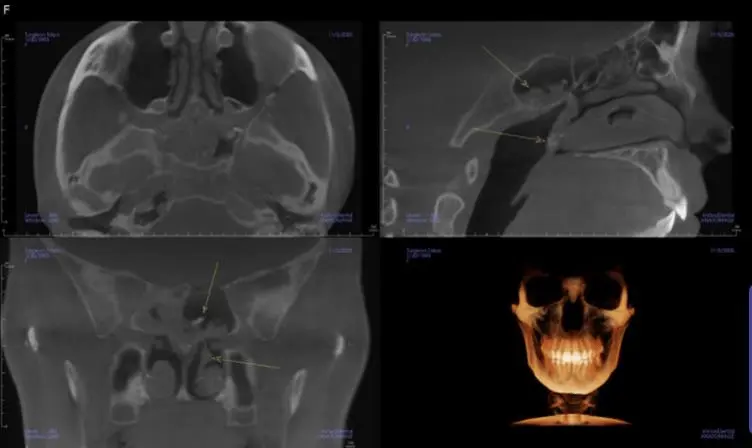
Case 2 — Sphenoid Sinus Fungal Infection A patient came in for TMJ evaluation. The dental cone beam CT scan revealed a sphenoid sinus fungal infection — completely asymptomatic, but potentially life-threatening if left undetected. The patient was immediately referred to an ENT specialist for treatment.

Common Questions

Your Questions Answered

We believe in educating our patients. Here are answers to common questions about holistic dentistry and our specialized treatments.

A cone beam CT scan is an advanced 3D imaging technique that captures a full three-dimensional view of your teeth, jawbone, sinuses, and airway — revealing issues that traditional flat X-rays often miss.

Dr. Perez recommends a 3D cone beam scan for TMJ symptoms, sleep apnea evaluation, orthodontic planning, or unresolved pain that hasn’t shown up on standard X-rays.

Upland Lighthouse Dentistry offers a 3D cone beam CT scan using advanced imaging technology, allowing Dr. Perez to examine the mouth from every angle before diagnosis.

Yes. A cone beam CT scan can reveal hidden bone infections, cavitations, sinus inflammation, and complications from previous root canals that wouldn’t appear on regular X-rays.

Often, yes. A 3D cone beam scan frequently uncovers infections or bone changes that were completely invisible on traditional X-rays, even when symptoms have gone unexplained.

Still Searching for Answers About Your Dental Health?

If your symptoms haven’t been fully explained, a cone beam CT (CBCT) scan may reveal what traditional X-rays cannot.