Key Takeaways
- Holistic dentistry vs traditional dentistry is generally a comparison of emphasis, not two separate systems of care.
- Holistic dentistry may consider oral health alongside factors such as nutrition, sleep, breathing, lifestyle, and dental materials.
- Traditional dentistry includes preventive, restorative, cosmetic, and surgical treatments supported by established dental practices.
- Many holistic dentists provide routine cleanings, fillings, examinations, and other standard dental services.
- Both approaches may use preventive and minimally invasive treatment methods.
- Dental materials should be selected based on clinical needs, safety, function, and patient-specific considerations.
Quick Answer
Understanding the difference between holistic and traditional dentistry can help you ask informed questions and choose care that aligns with your preferences. The distinction is not always absolute: many conventional dental practices use preventive, minimally invasive, and patient-centered methods, while holistic dentists may provide many of the same standard treatments.
What Is Holistic Dentistry?
Holistic dentistry, sometimes called integrative or biological dentistry, approaches oral care with attention to the relationship between the mouth and the rest of the body. In addition to examining teeth and gums, a holistic dentist may ask about factors such as nutrition, sleep, breathing, lifestyle, and the materials used in dental treatment.
The goal is to consider oral health within the broader context of a person’s health. Depending on the practice, this may include preventive care, minimally invasive techniques, biocompatibility considerations, airway-focused assessments, and other complementary approaches.
However, holistic dentistry is not a standardized treatment protocol. Services and philosophies can vary from one dentist to another. Patients should ask what a practice means by “holistic” and which treatments are supported by established dental evidence.
What Is Traditional or Conventional Dentistry?
Traditional dentistry, also called conventional dentistry, generally focuses on diagnosing, preventing, and treating conditions affecting the teeth, gums, and supporting structures. Common services include dental examinations, professional cleanings, fillings, crowns, root canal treatment, extractions, and periodontal care.
Conventional dentistry includes a wide range of approaches, from preventive care to restorative and cosmetic procedures. Modern dental practices may also use digital imaging, minimally invasive techniques, patient education, and other technologies to improve diagnosis and treatment planning.
The term “traditional” does not necessarily mean outdated. Many conventional dentists incorporate newer materials, evidence-based preventive strategies, and conservative treatment methods into everyday care.
Holistic Dentistry vs Traditional Dentistry: Key Differences
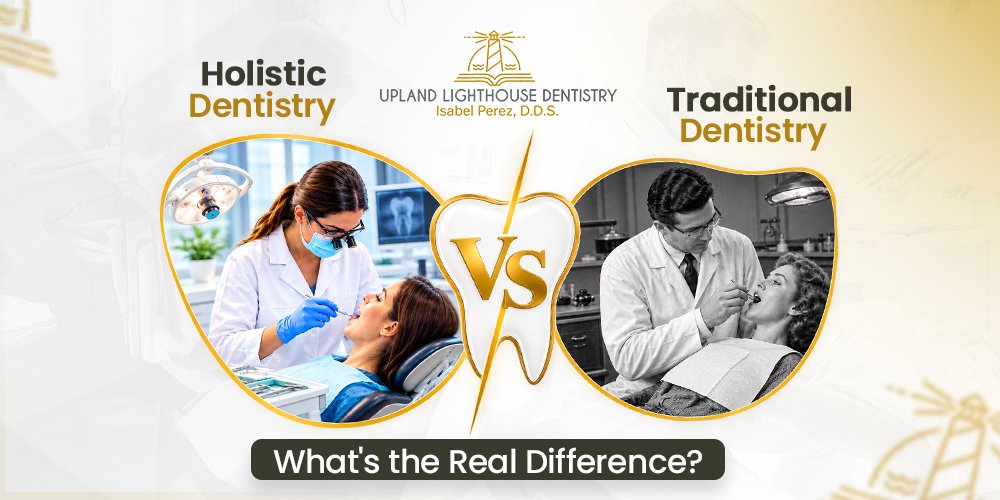
The holistic dentistry vs traditional dentistry comparison is best understood as a difference in emphasis rather than a strict division between two separate types of care.
| Area | Holistic Dentistry | Traditional Dentistry |
|---|---|---|
| Primary focus | Oral health considered alongside broader wellness | Diagnosis, prevention, and treatment of oral conditions |
| Treatment approach | May emphasize minimally invasive care, prevention, and material considerations | May use established preventive, restorative, and surgical treatments |
| Dental materials | May place additional emphasis on material selection and biocompatibility | Selects materials based on clinical needs, safety, durability, and patient factors |
| Whole-body considerations | May explore connections involving sleep, breathing, nutrition, and lifestyle | May consider relevant medical history and systemic factors affecting oral care |
| Preventive care | Often emphasizes prevention and long-term habits | Includes routine examinations, cleanings, fluoride recommendations, and preventive guidance |
| Treatment options | May offer integrative or complementary services depending on the practice | Offers a broad range of established dental treatments |
1. Approach to Oral and Overall Health
One commonly discussed distinction in the difference between holistic and traditional dentistry is how broadly the dentist frames oral health.
Holistic dentistry may consider oral conditions alongside factors such as nutrition, sleep quality, nasal breathing, jaw function, and lifestyle. For example, a practice may offer airway-focused evaluations or discuss how oral habits and breathing patterns relate to dental development.
Traditional dentistry primarily evaluates oral structures and conditions, while also considering relevant medical history, medications, and systemic conditions that may affect treatment. In practice, both approaches can recognize that oral health does not exist in isolation.
The American Dental Association explains that oral health is connected to overall health and that oral conditions can be associated with broader health concerns. However, the relationship varies by condition, and not every proposed whole-body connection is equally established.
2. Dental Materials and Biocompatibility
Material selection is another area where holistic and conventional practices may differ in emphasis.
Some holistic dentists discuss biocompatibility, which generally refers to how a material interacts with the body in a specific application. They may review a patient’s concerns about dental materials and offer options based on the patient’s clinical needs and the dentist’s treatment philosophy.
Conventional dentists also consider material safety, durability, function, allergies, and the condition being treated. Dental materials are evaluated for their intended uses, and treatment decisions should account for the benefits and limitations of each option.
For example, dental amalgam and composite resin are two materials used in restorative dentistry. The FDA recognizes that dental materials have different characteristics and provides guidance regarding dental amalgam, including considerations for certain higher-risk groups.
Patients considering material replacement should ask about the reason for treatment, available alternatives, potential risks, and whether replacing an existing restoration is clinically necessary.
3. Prevention and Minimally Invasive Care
Both approaches may value prevention, but holistic practices often make preventive philosophy a prominent part of their identity.
Preventive care can include regular examinations, professional cleanings, oral hygiene education, dietary guidance, and identifying problems before they become more complex. Minimally invasive dentistry focuses on preserving healthy teeth when treatment is needed.
Traditional dentistry also includes these principles. For example, evidence-based caries management may involve assessing a person’s risk, using preventive measures, and choosing restorative treatment when appropriate. The American Dental Association’s clinical resources describe prevention and conservative management as important parts of dental care.
Rather than assuming one approach always avoids invasive treatment, ask how the dentist evaluates risk and decides when treatment is necessary.
4. Airway, Sleep, and Breathing Considerations
Some holistic dental practices include airway dentistry or sleep-related assessments as part of their services. These may involve looking at oral structures, jaw development, breathing patterns, or symptoms that could warrant further evaluation.
Airway-focused dentistry can be relevant to patients who have concerns about snoring, mouth breathing, sleep quality, or jaw development. However, dental screening is not a substitute for a medical sleep evaluation or diagnosis. Conditions such as obstructive sleep apnea require appropriate assessment and management by qualified healthcare professionals.
If you are interested in this area, you can explore airway and sleep breathing care in Upland to learn how this type of dental service may be incorporated into a broader care plan.
5. Treatment Philosophy and Patient Communication
Holistic practices may spend more time discussing lifestyle, treatment materials, environmental exposures, and the patient’s broader wellness goals. Some patients appreciate this approach because it gives them an opportunity to discuss concerns beyond a specific tooth or symptom.
Traditional dental practices may place greater emphasis on diagnosing the immediate oral condition and recommending treatment based on established clinical guidelines. However, patient-centered communication is not limited to one category of dentistry.
Regardless of the label, a good dental consultation should explain the diagnosis, available options, expected benefits, potential risks, costs, and what may happen if treatment is postponed.
Do Holistic Dentists Do Fillings and Cleanings?
Many holistic dentists do fillings and cleanings. Holistic dentistry does not automatically mean avoiding standard dental procedures. Depending on the practice, services may include routine examinations, professional cleanings, fillings, crowns, gum care, and other restorative treatments.
The difference may lie in how the dentist approaches these procedures. For example, a holistic dentist may discuss tooth-preserving techniques, material preferences, or additional preventive considerations before recommending a filling.
A filling is generally used to restore a tooth affected by decay or damage. The type of filling material depends on factors such as the location and size of the restoration, functional demands, patient considerations, and the dentist’s assessment.
If you are considering a filling or replacement, ask:
- Is treatment necessary now?
- What materials are appropriate for my teeth?
- What are the benefits and limitations of each option?
- What happens if I delay treatment?
- Are there alternatives that preserve more healthy tooth structure?
These questions can help you understand the treatment rather than relying solely on whether a practice uses the term “holistic.”
Is Holistic Dentistry Better Than Traditional Dentistry?
There is no universal answer to whether holistic dentistry is better than traditional dentistry. The more useful question is whether a particular dentist’s approach, qualifications, treatment recommendations, and communication style meet your oral health needs.
Some patients may prefer a practice that places additional emphasis on dental materials, preventive habits, airway considerations, or whole-body wellness. Others may prioritize access to specific treatments, insurance coverage, established clinical protocols, or a particular provider’s experience.
A whole-body perspective can be valuable, but it should complement not replace appropriate diagnosis and evidence-based dental treatment.
Choosing Between Holistic and Conventional Dental Care
When comparing holistic dentistry vs conventional dentistry, start with your specific concerns.
If you need a routine cleaning, filling, gum evaluation, or crown, ask whether the practice provides that service and how treatment decisions are made. If you are interested in mercury filling removal, biocompatibility testing, airway care, or other specialized services, ask about the dentist’s training, assessment process, and the evidence supporting the recommended approach.
It may also help to review the dentist’s philosophy and experience before scheduling. For example, you can meet Dr. Isabel Perez and learn about her approach to dentistry to better understand the care philosophy at Upland Lighthouse Dentistry.
For patients exploring an integrative approach, holistic dentistry in Upland may provide more information about available services and the practice’s perspective on oral and whole-body wellness.
Final Thoughts
Understanding holistic dentistry vs traditional dentistry can make it easier to choose dental care based on your needs rather than terminology alone. Holistic dentistry may place greater emphasis on whole-body wellness, material considerations, and preventive habits, while traditional dentistry offers a broad foundation of established diagnostic, preventive, and restorative treatments.
Both approaches can include routine cleanings, fillings, and patient-centered care. The most important step is to work with a qualified dentist who explains your oral health clearly, discusses reasonable treatment options, and recommends care suited to your individual circumstances.
Frequently Asked Questions
Is holistic dentistry scientifically proven?
Some holistic dental treatments are well-established, while others have varying levels of evidence. Ask your dentist about the research and clinical reasoning behind any recommended treatment.
Does holistic dentistry include airway or sleep care?
Some holistic dentists offer airway-focused evaluations and sleep-related services. These can identify concerns for further assessment but do not replace medical diagnosis or treatment.
Should I choose a holistic or traditional dentist?
Consider your oral health needs, the dentist’s qualifications, treatment options, and the evidence behind their recommendations. A consultation can help you make an informed choice.