Key Takeaways
- Holistic dentistry treats the mouth as connected to the rest of the body.
- It may use advanced diagnostics such as CBCT imaging when a three-dimensional view is clinically necessary.
- Biocompatible, metal-free materials are used in place of traditional options like mercury amalgam.
- Jaw function, muscle activity, and airway-related concerns are evaluated alongside the teeth and gums when relevant to a patient’s symptoms or treatment.
Quick Answer
Holistic dentistry looks at your oral health in the context of your overall health. A holistic dentist may consider your teeth and gums alongside factors such as dental materials, jaw function, sleep, airway health, nutrition, and relevant medical history.
The approach focuses on understanding the factors contributing to a dental problem and using clinically appropriate treatment to address it.
You leave the dentist knowing you have a cavity, but do you know why you keep getting them? Maybe your mouth is dry from medication. Maybe your diet has changed. Maybe you’re grinding your teeth at night. And sometimes, the issue isn’t limited to the tooth that hurts.
That’s where holistic dentistry takes a broader approach. It evaluates the dental problem in front of you while also considering the factors that may be contributing to it. But what is holistic dentistry, and when does that broader approach make sense for your dental care? This guide breaks down how it works and whether it may be right for you.
What Is Holistic Dentistry?
Holistic dentistry starts with the idea that oral health deserves to be considered in the context of the rest of your health.
That can change what a dentist asks during an evaluation. Instead of focusing only on the tooth or gum tissue involved, the dentist may also consider factors such as bite forces, jaw function, dental materials, sleep, breathing, nutrition, or medications when they are relevant to the problem.
The teeth, jaws, jaw joints, and chewing muscles work together as part of the stomatognathic system. Breathing and airway function can also influence oral and craniofacial health.
A holistic dentist may therefore ask a broader question: what’s contributing to this problem, and which factors should be considered before deciding treatment?
How Does Holistic Dentistry Work?
Holistic dental care can vary from one practice to another, but the process generally starts with understanding the patient’s oral health, symptoms, medical history, and treatment goals.
1. Review Your Health and Dental History
Your dentist may ask about previous dental treatment, medications, sleep, jaw symptoms, allergies or sensitivities, and other factors that could be relevant to your oral health.
2. Evaluate More Than the Immediate Problem
Along with examining your teeth and gums, the dentist may assess your bite, jaw movement, muscle tenderness, or airway-related concerns when your symptoms or treatment needs make them relevant.
3. Use Diagnostic Testing When Needed
X-rays, CBCT imaging, or other diagnostic tools may help answer specific clinical questions. The dentist may also recommend additional testing when the information could affect diagnosis or treatment.
4. Build a Treatment Plan Around Your Needs
Once the dentist understands the findings, they can discuss treatment options, materials, preventive strategies, and other approaches that fit your condition and preferences.
How Does Holistic Dentistry Support Whole-Body Wellness?
The mouth connects with the rest of the body through blood vessels, nerves, immune responses, nutrition, and microorganisms that live in the oral cavity. That connection is one reason researchers continue to study how oral conditions relate to broader health.
Gum Health and Systemic Health
Periodontal disease has been associated with cardiovascular disease and diabetes, although these relationships are complex and do not prove that gum disease directly causes these conditions. Shared risk factors and biological pathways may contribute to the observed associations.
Jaw and Muscle Function
Problems involving the jaw joints and chewing muscles can contribute to symptoms such as facial pain, muscle tenderness, and headaches. Evaluating jaw function can help determine whether these structures play a role in a patient’s symptoms.
Sleep and Airway Health
Craniofacial structure and airway anatomy can influence breathing during sleep, although obstructive sleep apnea has multiple risk factors. An airway dentist can identify relevant structural concerns and refer patients for appropriate sleep evaluation when needed.
What Are the Benefits of Holistic Dentistry?
Choosing a whole-body approach to dental care comes with advantages that extend past the dental chair.
More Options for Dental Materials
Patients who prefer mercury-free restorations can discuss alternatives such as composite resin or other restorative materials with their dentist. Still, material selection ultimately depends on the type of tooth cavity and clinical considerations.
The FDA also recommends that certain higher-risk groups avoid dental amalgam when possible and appropriate, including pregnant women, nursing women, young children, and people with certain medical conditions. It does not recommend removing intact amalgam fillings solely to prevent disease.
Identifying Factors That Affect Oral Health
Rather than investigating only the immediate symptom, holistic dental care may also consider factors contributing to a problem, such as oral hygiene, diet, bite forces, dry mouth, or jaw function.
More Targeted Diagnostic Imaging
CBCT imaging can provide 3D views of the teeth, jaws, and surrounding structures when standard X-rays are unable to answer the clinical question. Because CBCT uses ionizing radiation, it is used selectively when additional information can influence diagnosis or treatment.
Emphasis on Preserving Tooth Structure
A conservative approach aims to preserve healthy tooth structure whenever doing so is clinically appropriate. Depending on the condition being treated, dentists may use minimally invasive techniques, including lasers or other adjunctive technologies.
Avoiding Unnecessary Treatment
Conservative and diagnostic-driven treatment planning means intervention is based on the needs of your oral health, avoiding treatment that isn’t necessary for the patient’s specific condition.
Holistic Dentistry vs. Traditional Dentistry
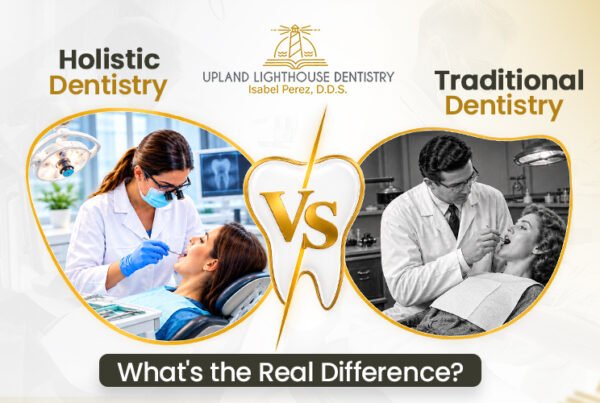
Conventional and holistic dentistry share many of the same foundations, including prevention, diagnosis, restorative care, and treatment of gum disease. Where they differ is in the scope of the evaluation and the factors emphasized during treatment planning.
The two approaches aren’t at odds. Holistic dentistry still uses proven clinical techniques. It simply widens the lens by incorporating jaw mechanics, airway function, and material safety into decisions that may receive less attention during a routine dental visit.
Is Holistic Dentistry Right for You?
Holistic dentistry may be a good fit if you want your dental care to consider more than the immediate condition of your teeth and gums, or if you have questions about how your oral health fits into your broader health.
You may want to consider holistic dentistry if you:
- Have chronic headaches, facial pain, jaw discomfort, or muscle tension that may involve jaw function.
- Experience snoring, poor sleep, or other symptoms that raise questions about airway health.
- Have existing amalgam fillings and want to discuss their condition and replacement options.
- Have been told you may need a root canal and want to understand the available treatment options.
- Want a dentist who considers your health history and treatment preferences alongside your oral health.
- Prefer a preventive, conservative approach to dental care when clinically appropriate.
An initial holistic dental consultation may involve more than a routine cleaning and exam. Your dentist may review relevant medical history, ask about symptoms such as jaw discomfort or sleep concerns, and recommend additional imaging or testing when the clinical findings call for it.
Final Remarks
Your teeth don’t exist in isolation. The way you bite, breathe, sleep, chew, and respond to dental materials can all shape the way your oral health feels and functions. Holistic dentistry brings those pieces into the conversation when they’re relevant to your care.
That means taking the time to understand what’s happening before deciding what needs to be done and choosing treatment with your long-term oral health in mind.
Dr. Isabel Perez and the team are here to help you make sense of your options and find an approach that fits your needs. Schedule a consultation today.
Frequently Asked Questions
Is holistic dentistry safe?
Yes. Holistic dentists use the same evidence-based clinical standards as conventional dentistry, with an added focus on biocompatible materials and diagnostic-driven treatment planning.
Does holistic dentistry include fillings, crowns, and root canal alternatives?
Yes. Holistic dentists provide the same range of restorative care, using metal-free materials and techniques designed to preserve natural tooth structure whenever possible.
Will my insurance cover holistic dental treatment?
Coverage varies by plan and procedure. Many core treatments may receive the same type of insurance coverage as conventional dental work, although specialized services can vary by plan. Check with your dental insurance provider and the practice before treatment to understand what your plan covers.
What is the connection between the mouth and sleep apnea?
Jaw size, craniofacial structure, and airway anatomy can influence breathing during sleep, although obstructive sleep apnea has multiple contributing factors. A dentist with airway-focused training can screen for relevant structural concerns and refer you for appropriate sleep evaluation when needed.
How do I know if I need my mercury fillings removed?
Not every amalgam filling needs removal. A dentist can evaluate the condition of the filling, review relevant health considerations, and discuss whether replacement is appropriate. The FDA does not recommend removing intact amalgam fillings solely to prevent disease.