Key Takeaways
- TMJ headaches are associated with conditions affecting the temporomandibular joints and surrounding chewing muscles.
- Common symptoms may include temple pain, facial tenderness, jaw stiffness, and discomfort during chewing.
- Possible causes include jaw muscle tension, teeth clenching, grinding, joint problems, and other contributing factors.
- Headaches associated with TMD can overlap with migraines and tension-type headaches, making accurate evaluation important.
- Pain that changes with jaw movement or chewing may provide useful diagnostic information.
- Treatment options may include self-care, habit modification, physical therapy, oral appliances, and medication, depending on the diagnosis.
Quick Answer
TMJ headaches are headaches associated with temporomandibular disorders (TMDs), which affect the jaw joints and the muscles responsible for jaw movement. When these structures become painful or irritated, discomfort may extend beyond the jaw to the temples, face, and surrounding areas. Understanding the connection between jaw function and recurring head pain can help people recognize possible symptoms and seek an appropriate evaluation.
What Are TMJ Headaches?
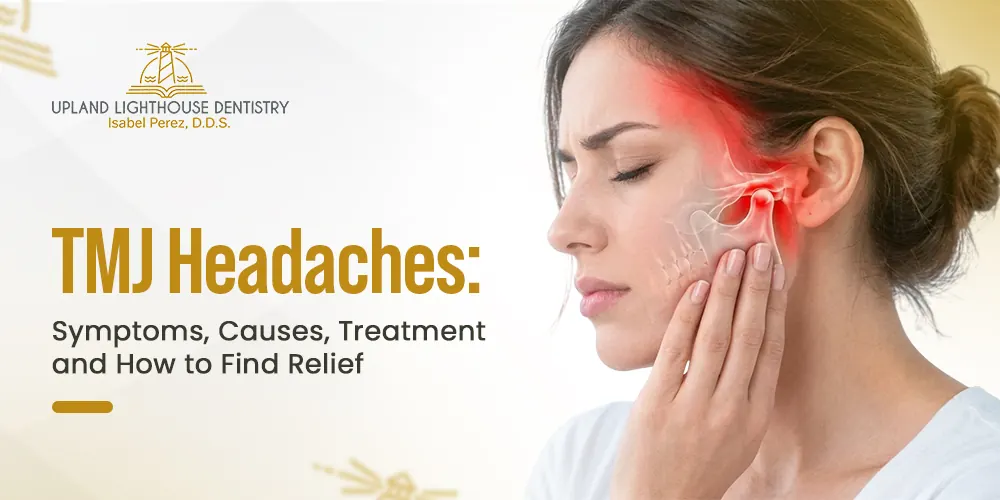
A headache associated with a temporomandibular disorder may develop when problems involving the jaw joints or surrounding chewing muscles contribute to pain in the head, particularly around the temples.
The temporomandibular joints work with several muscles and supporting structures to allow the jaw to move smoothly. When these structures are affected by a joint condition or muscle-related problem, discomfort may be felt in nearby areas.
According to NIDCR, TMDs include more than 30 conditions that can affect the jaw joints and the muscles controlling jaw movement. These conditions generally fall into three broad categories:
- Joint disorders, including problems involving the joint disc.
- Disorders affecting the muscles used for chewing.
- Headaches associated with TMDs.
Not every headache accompanied by jaw discomfort is caused by a TMD. Migraines, tension-type headaches, dental problems, and other conditions can produce overlapping symptoms. A proper evaluation is therefore important before connecting recurring headaches to jaw dysfunction.
What Are the Common TMJ Headache Causes?
There is no single explanation for every headache associated with jaw problems. In some cases, the discomfort may involve overworked chewing muscles, joint-related conditions, or multiple contributing factors.
Understanding possible tmj headache causes can help explain why jaw-related discomfort sometimes extends into the head.
1. Jaw Muscle Tension
The muscles responsible for chewing and controlling jaw movement remain active throughout the day. Repeated clenching, grinding, or excessive jaw activity may contribute to muscle tenderness and discomfort.
When the muscles around the jaw and temples become painful, the discomfort may spread into nearby areas of the head.
2. Teeth Clenching and Grinding
Bruxism refers to repeated teeth grinding or jaw clenching. It may occur during sleep or while someone is awake.
Frequent clenching can increase activity in the chewing muscles and may contribute to jaw soreness, facial discomfort, and headaches in some individuals. However, not everyone who grinds or clenches their teeth develops a TMD.
3. Temporomandibular Joint Problems
The jaw joints contain several structures that work together during movement, including a small cushioning disc. Problems involving the joint or disc may contribute to pain, stiffness, and restricted movement.
Depending on the condition, discomfort may occur near the ears, jaw, or temples.
4. Stress and Jaw Clenching Habits
Stress may influence how people hold their jaw muscles throughout the day. Some individuals unconsciously tighten their jaw or clench their teeth during periods of concentration or tension.
Psychological and life stressors may also influence how persistent pain develops or is experienced. However, stress should not automatically be considered the only cause of jaw-related headaches.
5. Joint Inflammation or Arthritis
Certain forms of arthritis can affect the temporomandibular joints. Joint inflammation or degenerative changes may contribute to pain and difficulty moving the jaw.
A healthcare professional can assess whether joint-related changes are contributing to the symptoms.
What Does a TMJ Headache Feel Like?
The way a headache feels can vary depending on the structures involved and the individual’s pain experience. Some people describe a dull ache around the temples, while others experience pressure near the ears, facial tenderness, or discomfort that becomes more noticeable when chewing. See a more detailed look at what a TMJ headache feels like.
Common characteristics may include:
- A dull, aching sensation around one or both temples.
- Pressure or tenderness around the sides of the head.
- Pain that extends toward the forehead, cheeks, or ears.
- Tightness in the jaw or facial muscles.
- Discomfort that becomes worse when chewing, yawning, or opening the mouth.
- Headaches accompanied by jaw stiffness or tenderness.
- Pain that increases after prolonged clenching or grinding.
One important feature is the relationship between head pain and jaw activity. According to the International Classification of Headache Disorders (ICHD-3), a headache attributed to TMD may become worse with jaw movement, chewing, or clenching. It may also be reproduced during an examination involving pressure on the temporalis muscles or movement of the jaw.
However, these characteristics are not enough to establish a diagnosis on their own. A professional evaluation is needed to determine whether the headache is related to the jaw or another condition.
What Are the Common TMJ Headache Symptoms?
Recognizing TMJ headache symptoms can help identify patterns that may connect recurring head pain with jaw function.
Some symptoms involve the head, while others affect the jaw, face, and surrounding muscles.
Head-Related Symptoms
- Aching or pressure around the temples.
- Pain on one or both sides of the head.
- Discomfort extending toward the forehead.
- Headaches that become noticeable after chewing or prolonged jaw activity.
- Recurring headaches accompanied by facial tenderness.
Jaw and Facial Symptoms
- Jaw soreness or tenderness.
- Pain when chewing or opening the mouth.
- Clicking or popping sounds accompanied by discomfort.
- Jaw stiffness or restricted movement.
- Facial muscle tenderness.
- Pain around the ears.
- Difficulty opening or closing the mouth comfortably.
Related Symptoms
Some people may also experience neck discomfort, tooth pain, or ear-related symptoms alongside jaw problems. These symptoms can have several possible causes and should be assessed in context.
It is worth remembering that painless clicking or popping in the jaw is common and does not necessarily indicate a disorder requiring treatment. The presence of pain or restricted movement makes further evaluation more relevant.
Can TMJ Disorders Cause Headaches?
Temporomandibular disorders can be associated with headaches, particularly pain around the temples. This connection may involve the chewing muscles, jaw joints, and surrounding structures.
For example, when the temporalis muscle becomes painful or sensitive, discomfort may be experienced around the temple region. Similarly, joint-related problems may contribute to pain that spreads toward the face or nearby areas.
The ICHD-3 recognizes headache attributed to TMD as a distinct headache category. Its diagnostic criteria consider whether the headache is aggravated by jaw movement or function and whether familiar pain can be reproduced during a physical examination.
However, having both jaw pain and headaches does not automatically establish a connection between them. Some individuals experience migraines or other headache disorders alongside TMD. A healthcare professional may need to evaluate both conditions rather than assuming one explains the other.
Can TMJ Disorders Cause Migraines?
This is an important question because migraines and jaw-related headaches can share certain characteristics.
TMD and migraine may occur together, and some symptoms can overlap. A person experiencing jaw tenderness, for example, may also have a separate migraine condition.
Research discussing the relationship between TMD and migraine highlights the importance of evaluating headache history and identifying features that distinguish the two conditions.
Migraine symptoms may include:
- Moderate to severe head pain.
- Pulsating or throbbing discomfort.
- Nausea or vomiting.
- Sensitivity to light.
- Sensitivity to sound.
- Pain that becomes worse with routine physical activity.
- In some cases, visual or sensory disturbances known as aura.
Not every migraine includes all these symptoms, and migraine presentations can differ between individuals.
Jaw-related headaches, on the other hand, may be more closely associated with jaw movement, chewing, clenching, or tenderness around the temporalis muscles. These differences can provide useful information during an assessment, although they are not a substitute for diagnosis.
If someone experiences recurring headaches alongside jaw pain, both concerns should be discussed with an appropriate healthcare professional.
Is It a Migraine or TMJ Pain?
Distinguishing a migraine from jaw pain with headache can be challenging because both may involve discomfort around the temples and face.
Looking at the accompanying symptoms and triggers can help identify patterns worth discussing with a healthcare professional.
| Feature | Headache attributed to TMD | Migraine |
|---|---|---|
| Pain location | Often temples, jaw area, or nearby facial regions | Often one side of the head, but may affect both |
| Pain sensation | Often aching or pressure-like | Frequently pulsating or throbbing |
| Jaw movement | May worsen pain | Not necessarily a trigger |
| Chewing | May aggravate symptoms | May be uncomfortable during an attack but is not a defining feature |
| Jaw tenderness | May be present | Not a defining symptom |
| Light and sound sensitivity | Not defining features | Common migraine symptoms |
| Nausea | Not a defining feature | May occur |
What About TMJ Tension Headaches?
The term tmj tension headache is sometimes used to describe head discomfort associated with tight or painful jaw muscles.
Muscle-related TMD can contribute to tenderness around the temples and other facial areas. However, a headache attributed to TMD and a tension-type headache are not necessarily the same condition.
The International Headache Society recognizes an overlap between headaches attributed to TMD and tension-type headaches. When a TMD diagnosis is uncertain, the headache may need to be evaluated under the appropriate headache classification instead.
This distinction matters because similar symptoms do not always have the same underlying cause or require the same management approach.
How Are TMJ-Related Headaches Diagnosed?
There is no single test that can identify every type of TMD. Diagnosis generally involves understanding the person’s symptoms, reviewing their medical and dental history, and examining the jaw and surrounding muscles.
A dental or healthcare professional may consider the following:
1. Symptom and Medical History
The provider may ask:
- When did the headaches begin?
- Where is the discomfort located?
- Does chewing or opening the mouth make it worse?
- Do you notice jaw clenching or teeth grinding?
- Do headaches occur alongside jaw stiffness or tenderness?
- Are there other symptoms, such as nausea or sensitivity to light?
These details help establish whether the headache pattern may be associated with jaw function or another condition.
2. Jaw and Muscle Examination
A physical examination may include checking:
- Jaw movement and range of motion.
- Tenderness around the temporomandibular joints.
- Sensitivity in the chewing and temple muscles.
- Clicking or popping during jaw movement.
- Whether familiar pain occurs during certain movements.
The ICHD-3 includes jaw movement and temporalis muscle palpation among the clinical findings used to assess headaches attributed to TMD.
3. Imaging When Appropriate
Imaging is not necessary for every patient. Depending on the symptoms and examination findings, a provider may recommend X-rays, CT scans, or MRI to evaluate specific joint structures.
These imaging methods provide different information about the bones and soft tissues. The decision to use them depends on the clinical situation.
4. Considering Other Headache Conditions
Because migraines, tension-type headaches, dental conditions, and other disorders can produce overlapping symptoms, a provider may recommend further evaluation or referral to another specialist.
The purpose is to avoid attributing every headache to the jaw without considering other possible explanations.
What Is the Treatment for TMJ Headaches?
The appropriate approach depends on the underlying cause, symptom severity, and individual health history. There is no single TMJ treatment that works for everyone.
In many cases, conservative approaches are considered before more complex procedures. NIDCR recommends beginning with simple, reversible management options for TMDs rather than immediately pursuing treatments that permanently alter the teeth, bite, or jaw joints.
Here are some approaches that may be considered.
1. Jaw Rest and Habit Modification
Reducing excessive jaw activity may help limit additional strain on sensitive muscles and joints.
Depending on the symptoms, a provider may recommend:
- Temporarily choosing softer foods.
- Avoiding excessive gum chewing.
- Reducing unnecessary jaw clenching.
- Avoiding habits such as nail biting.
- Being mindful of keeping the jaw relaxed when not eating.
These adjustments can be part of a conservative management plan.
2. Heat or Cold Applications
Applying a warm or cold compress to the affected area may help some people manage jaw discomfort.
The choice depends on individual comfort and the nature of the symptoms. It is best to follow professional guidance about the appropriate method and duration.
3. Physical Therapy and Jaw Exercises
A qualified professional may recommend exercises or physical therapy to support jaw movement and function.
Depending on the diagnosis, therapy may include gentle stretching, movement exercises, or manual techniques. NIDCR identifies physical therapy and certain forms of manual therapy as possible approaches for managing TMD symptoms.
Exercises should be appropriate for the individual’s condition. Forceful or unsupervised movements may aggravate discomfort.
4. Oral Appliances
Some patients may be advised to use an intraoral appliance or splint, particularly when teeth grinding or clenching is a concern.
These devices may serve specific purposes, such as protecting teeth from grinding-related wear. However, evidence supporting their effectiveness for TMD pain is limited, and they should not be considered a universal solution.
5. Medication
Depending on the condition, a healthcare professional may recommend medication to manage pain or inflammation.
Options may include certain over-the-counter pain relievers or prescription medications. The appropriate choice depends on medical history, existing medications, possible interactions, and individual risk factors.
Medication should be used according to professional advice rather than as a long-term substitute for evaluating the underlying problem.
6. Stress-Management Approaches
For individuals who notice increased jaw clenching during stressful situations, relaxation techniques and behavioral approaches may be included in a management plan.
These approaches may help people become more aware of jaw tension and habits that aggravate their symptoms. They do not replace an evaluation of joint or muscle-related conditions.
7. More Advanced Procedures
For selected patients with specific joint-related problems, a specialist may discuss procedures such as arthrocentesis or arthroscopy.
These interventions are not necessary for most people experiencing TMD symptoms. More complex procedures, including open-joint surgery, require careful consideration of potential benefits, risks, and alternatives.
How Can You Find TMJ Headache Relief at Home?
Alongside professional care, certain everyday habits may help reduce jaw strain and make discomfort easier to manage. These measures are not a substitute for diagnosis, particularly when headaches are recurring or severe.
Some practical steps include:
- Choose softer foods: Temporarily avoid foods that require excessive chewing.
- Avoid gum chewing: Repeated chewing may increase activity in already sensitive jaw muscles.
- Be mindful of clenching: Try to notice when you hold your teeth together unnecessarily.
- Apply a warm compress: Gentle warmth may help ease muscle discomfort.
- Practice relaxation: Deep breathing and other relaxation techniques may help reduce habitual jaw tension.
- Maintain comfortable posture: Avoid positions that cause prolonged tension around the neck and jaw.
- Prioritize sleep: Maintain a consistent sleep routine and discuss ongoing sleep difficulties with a healthcare professional.
How a Holistic Dental Approach Considers Jaw Health
Jaw discomfort can involve multiple structures, including the joints, chewing muscles, and surrounding tissues. Understanding these relationships may be useful when evaluating recurring symptoms.
At Upland Lighthouse Dentistry, the dental care philosophy associated with Dr. Isabel Perez considers oral health in the context of broader health and wellness. For patients interested in learning more, the practice offers information about its approach to an Airway Dentist and sleep and breathing care.
Understanding Holistic Dentistry also explains the practice’s broader perspective on oral health. You can explore Dr. Isabel Perez’s dental philosophy and approach to patient care to learn more about the principles behind the practice.
It is important to understand that an airway concern is not necessarily the cause of a person’s headaches, and holistic dental care should not be presented as a guaranteed solution for TMD. Each patient’s symptoms require appropriate assessment, and referrals to other healthcare professionals may be appropriate when needed.
Conclusion
TMJ headaches can affect everyday comfort, particularly when jaw pain, muscle tenderness, and recurring head discomfort occur together. Although these symptoms may be connected to temporomandibular disorders, migraines and other headache conditions can produce similar experiences.
Understanding the possible causes, recognizing accompanying symptoms, and seeking an appropriate evaluation can help identify what may be contributing to the discomfort. Treatment should be based on individual findings rather than assuming that every headache originates from the jaw.
If you are experiencing recurring jaw discomfort alongside headaches, a dental evaluation may help determine whether further assessment of your jaw function is appropriate.
Frequently Asked Questions
What causes TMJ headaches?
They may be associated with painful chewing muscles, joint problems, teeth clenching, grinding, or other factors affecting the temporomandibular region. The underlying cause varies between individuals.
What are the most common symptoms of a TMJ headache?
Common symptoms may include aching around the temples, facial tenderness, jaw soreness, discomfort while chewing, and headaches that become worse with jaw movement.
Can TMJ headaches occur on one side of the head?
Headaches attributed to TMD may occur on one or both sides. The pattern can depend on whether one or both temporomandibular regions are involved.
How can I tell if my headache is caused by TMJ?
A possible connection may be suggested when headaches occur alongside jaw tenderness and become worse with chewing, clenching, or jaw movement. However, a professional examination is necessary to assess the cause and rule out other headache conditions.
What is the difference between a migraine and a TMJ headache?
Migraines commonly involve throbbing pain, nausea, and sensitivity to light or sound. A headache attributed to TMD may be more closely associated with jaw movement, chewing, and tenderness around the temple muscles. Some people may experience both conditions.